12 DAYS LUXURY SOUTH LUANGWA, LOWER ZAMBEZI & VICTORIA FALLS
LUSAKA — The First Night on African Soil
Lusaka receives you quietly, without the grand theatrical gestures of some African capitals, and that understatement is entirely appropriate — because what lies ahead in the coming twelve days is so vast and wild and extraordinary that the city wisely steps aside and lets the anticipation do all the work. You arrive in the warm Zambian evening, the air softer and more fragrant than anything the northern hemisphere produces at this time of year, carrying the faint sweetness of msasa trees and red African earth after rain. Your luxury lodge in the leafy diplomatic quarter is all clean lines and African art and the kind of considered, unhurried hospitality that tells you immediately that everyone here understands exactly what kind of journey you are about to undertake. Over dinner — tender Zambian beef, roasted sweet potato, a glass of good South African red — the conversation turns inevitably to what comes next, and the excitement is a physical thing, present at the table like a fifth guest, impossible to ignore. Sleep comes easily in the cool highland air at 1,300 metres, and the last thing you are aware of before it does is the sound of a nightjar calling somewhere in the garden, that first wild voice, that first small signal that Africa has already begun.
SOUTH LUANGWA NATIONAL PARK — The Valley of the Leopard
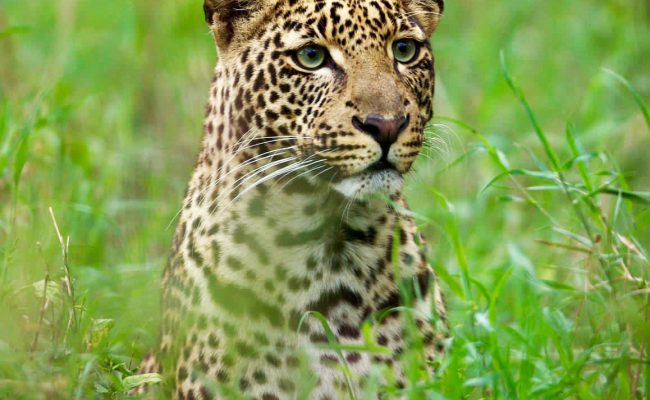
The flight from Lusaka to South Luangwa takes less than two hours, but it crosses a distance that feels immeasurably greater than the map suggests — from the ordinary world into something else entirely. The small aircraft drops over the escarpment and the Luangwa Valley appears below, a vast, ancient depression in the earth stretching away to the horizon, the great river looping and winding through it in silver curves, the floodplains golden and green on either side, and already, even from the air, you can see the dark shapes of animals moving across the landscape in numbers that make the chest tighten with something between excitement and disbelief. South Luangwa is one of the greatest wildlife sanctuaries on the African continent, and it carries that status not with the self-consciousness of a famous place but with the quiet, absolute confidence of somewhere that has been profoundly, magnificently itself for a very long time. Your luxury camp sits on the bank of the Luangwa River — a collection of supremely elegant tented suites raised on wooden platforms above the floodplain, each one oriented to face the river so that from your bed, through the mesh walls open to the African night, the view is of water and sky and the dark shapes of hippos on the opposite bank and the stars of the southern hemisphere in extraordinary, unobstructed abundance above it all. The Luangwa River is the spine of this ecosystem, and everything in the valley organises itself around it. Enormous pods of hippos — sometimes eighty, a hundred strong — pack the deeper pools, their constant snorting and bellowing and yawning providing the valley’s background music from dawn to long after dark. Nile crocodiles of prehistoric size haul themselves onto sandbanks in the morning sun, their ancient armoured bodies perfectly still, their yellow eyes watching everything with an attention refined over sixty-five million years of continuous, uninterrupted evolutionary success. Elephants come to the river in the late afternoon in family groups that move with the quiet, ancient dignity of creatures who understand, at some deep biological level, that this landscape belongs to them in a way it will never quite belong to anything else. And the leopards. South Luangwa is perhaps the finest leopard-watching destination on the entire African continent, and the reason is simple — the combination of riverine forest, dense woodland, and open floodplain creates ideal habitat for an animal that has always preferred the places where light and shadow meet. They appear in the fever trees above the river, draped along branches in that characteristic posture of supreme, liquid relaxation, regarding the world below with amber eyes that hold a depth of self-possession no other creature quite matches. They appear at the edge of the floodplain in the last light, moving through the grass with a fluid, boneless grace that makes every other animal’s movement look effortful by comparison. And they appear in the darkness — caught in the spotlight of the night game drive, frozen for a moment in a pool of golden light before dissolving back into the African night with a speed and completeness that makes you question whether they were ever really there at all. This park invented the walking safari, and to experience one here — to leave the vehicle and move through this landscape on foot with nothing between you and the wild world around you — is to feel something ancient and fundamental click back into place inside you, some atavistic awareness of your own animal nature that the modern world has very nearly succeeded in extinguishing entirely. Your guide reads the ground like a text — a pawprint pressed into red dust, a broken twig, the alarm call of an oxpecker spiralling up from the long grass ahead — and leads you through a landscape that is reading you just as carefully in return. South Luangwa does not give up its gifts all at once. It reveals them slowly, one extraordinary encounter at a time, over days that begin before dawn and end long after dark and fill every hour between with something that demands your complete, undivided, grateful attention.
LOWER ZAMBEZI NATIONAL PARK — Where the River is Everything
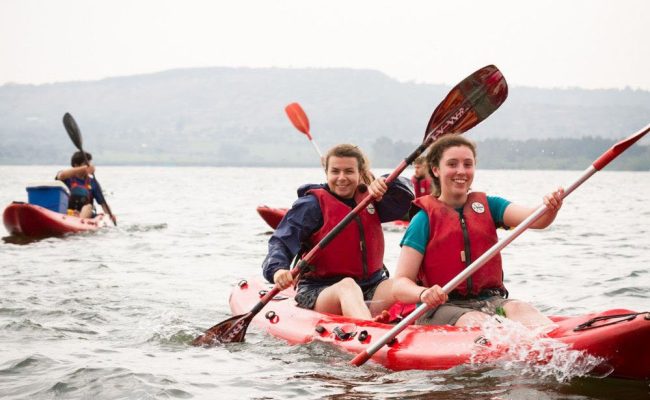
To move from South Luangwa to the Lower Zambezi is to trade one kind of wilderness magnificence for another entirely — and the contrast is so complete and so perfectly calibrated that experiencing them in sequence feels like a piece of deliberate, inspired curation rather than mere geographical proximity. The light aircraft deposits you on a bush airstrip hacked from the mopane woodland, and within minutes your guide is driving you through the park toward the river and your luxury camp, which sits directly on the bank of the Zambezi — the great river itself, four hundred metres wide at this point, moving with a slow, enormous, brown-green power that communicates its own authority without any need for spectacle. The Lower Zambezi is a river safari, and that distinction changes everything about the experience. Where South Luangwa offers the land — the walking, the driving, the red earth and the fever trees and the leopard in the branches above — the Lower Zambezi offers the water, and with it a perspective on the wild world that is unlike anything a conventional game drive can produce. You climb into a canoe in the early morning — the river still and silver in the pre-dawn light, the mist lying low across the water, the opposite bank a dark line of Zimbabwean escarpment rising through the haze — and you paddle in silence through a world that has not yet fully woken. The canoe moves you to the level of the water, eye to eye with the river and everything that lives in and along it, and the effect is one of complete, radical immersion. An elephant appears on the bank ten metres ahead — a young bull, drinking with his trunk, utterly unconcerned by your presence — and you drift past him so close you could count the wrinkles in his skin, watching his great grey side rise and fall with each breath, feeling the air that he displaces. A hippo surfaces three metres to your left with a sudden, enormous exhalation of warm, fetid breath, regards you with small pink eyes for a long, assessing moment, and then slips beneath the surface again without urgency, without alarm, without any suggestion that your presence in his river constitutes anything more than a minor and temporary curiosity. Nile crocodiles line the sandbanks ahead — five, eight, twelve of them in a row, their prehistoric bodies perfectly aligned with the morning sun, their jaws agape in that characteristic crocodilian smile that manages to be simultaneously torpid and utterly menacing. The fishermen among your group can cast a line from the canoe into the Zambezi’s main channel for tigerfish — arguably the most electrifying freshwater fighting fish in the world, built like an armoured torpedo with teeth like broken glass, that takes a lure with an explosive violence and then leaps and runs and fights with a ferocity completely disproportionate to its size. Evening at your camp is a ritual of near-perfect luxury — a sundowner on the riverbank as the Zambian sun descends through a sky that moves through amber and rose and deep burnt orange before the African dark arrives with its sudden, absolute completeness, the river turning black and gold beneath the fading light, hippos beginning their nightly chorus in the shallows below the camp, the stars coming out one by one and then all at once above the escarpment on the Zimbabwean side. Dinner is served on a deck cantilevered above the river, the sound of the water below the floorboards, the African night pressing warmly against the candlelight, and the particular contentment of people who have spent a day doing exactly what human beings were designed to do — moving through a wild landscape with open eyes, paying full attention to a world immeasurably older and more intricate than anything they have made.
VICTORIA FALLS — The Smoke That Thunders
Nothing that has been written about Victoria Falls — and a very great deal has been written, by people far more gifted with language than most — has ever come within striking distance of the reality. This is not a failure of language. It is a testament to the Falls themselves, which exist at a scale and with a power and a beauty that simply exceed what description can contain, the way certain experiences exceed what memory can hold and certain emotions exceed what words can carry. You hear it long before you see it. Kilometres away, driving toward Livingstone through the dry mopane woodland, a deep, continuous thunder begins to build beneath the sound of the engine — felt as much as heard, a vibration in the sternum, a pressure change in the air that something in the animal body recognises and responds to before the conscious mind has caught up. Then the mist appears — rising above the treeline like smoke from a fire of impossible size, a white column that climbs hundreds of metres into the blue Zambian sky and can be seen from thirty kilometres away, which is why the Kololo people who lived here centuries before Livingstone arrived named it Mosi-oa-Tunya — The Smoke That Thunders — a name so perfectly accurate and so much more evocative than anything the Victorian era produced that it is the name the Falls truly deserve. You enter the rainforest that lines the gorge — a strip of permanently saturated vegetation maintained entirely by the Falls’ own spray, an anomalous green oasis in the surrounding dry woodland — and the sound builds around you to something that is no longer merely loud but physically present, a force that presses against your body and fills your skull and makes normal speech impossible. The first viewpoint arrives and you grip the railing and look across the gorge and the Falls are there — the full 1,708 metres of them, the entire flow of the fourth-largest river in Africa launching itself over a basalt lip and falling 108 metres into the Batoka Gorge below in a curtain of white water and spray and raw, magnificent, terrifying power that has been doing exactly this, without pause or diminishment, for the entirety of human history and long before. You will be soaked within minutes. The spray rises from the gorge like rain falling upward, drenching everything within five hundred metres, and you will stand there in your wet clothes and your wet hair with water streaming down your face and you will not move, because moving would mean looking away, and looking away is something you find, to your own mild surprise, that you are constitutionally incapable of doing. The Devil’s Pool — that extraordinary natural rock pool right at the lip of the Falls on the Zambian side, accessible in the low-water season — offers the most vertiginous, exhilarating, and frankly improbable experience the Falls provide: swimming to the very edge of the greatest waterfall on Earth, lying on the submerged rock lip, looking over the rim into the gorge one hundred and eight metres below, the entire Zambezi River thundering past your left ear, and feeling — despite everything your survival instinct is screaming at you — completely, inexplicably, perfectly safe. The evenings in Livingstone belong to the river. A sunset cruise on the Zambezi above the Falls — the water still and golden in the last light, elephants silhouetted on the Zimbabwean bank, a gin and tonic cold in your hand, the distant thunder of the Falls a constant presence in the background — is an experience of such layered, multisensory beauty that it seems to compress the entire preceding eleven days into a single, perfect, luminous moment. This is how Africa ends a journey. Not with a quiet fade but with its greatest single statement of power and beauty and wild, unstoppable life — a reminder, delivered at full volume and full force, that the natural world at its most extreme and most magnificent is something before which the only honest human response is complete and absolute and grateful surrender.
3 Days – Lochinvar NP Bird-Watching Excursion
4 Day Chimpanzee and Crater Lakes Tour
5-Day Classic Premium Safari (Mid-Luxury)
6 Days – Explore Etosha, Swakopmund and Sossusvlei | Private Guided Camping
7 Days Masai Mara → Lake Nakuru → Amboseli Safari – 7 Days / 6 Nights
Tailor-Made 9 Days Best Zambia Tour – 9 Days / 8 Nights
10 Days Exploring the Wonders of Zambia
8 Days Discover Rwanda Gorillas, Chimps, Dian Fossey Tour (Exclusively Private)


 Email us bookings@twijaafrica.com
 Call us +256 777 559835