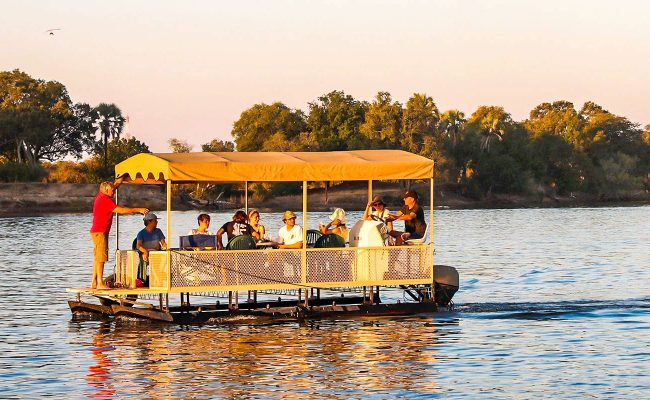
3-Day Luxury Birding Safari — Zimbabwe
One of Africa’s most rewarding and underappreciated birding destinations, where over 670 recorded species inhabit landscapes ranging from the mist-forest gorges of the Eastern Highlands to the fever tree woodlands of the Zambezi Valley — all experienced from a platform of genuine luxury that Zimbabwe’s remarkable hospitality tradition delivers better than almost anywhere on the continent.
Zimbabwe for the Birder — Why It Belongs at the Top of the List
Zimbabwe sits at the convergence of several of Africa’s major biomes — the Zambezian miombo woodland that covers much of the interior, the riparian forests of the great river systems, the montane forests of the Eastern Highlands bordering Mozambique, and the mopane woodland and riverine vegetation of the Zambezi Valley. This biogeographical diversity, compressed into a relatively compact country with excellent infrastructure and some of Africa’s finest guiding tradition, makes Zimbabwe a birding destination of the first rank that remains dramatically undervisited compared to Kenya, Tanzania, or South Africa. The guides here — many of them trained through Zimbabwe’s rigorous professional guide licensing system, one of the most demanding in Africa — bring to birding the same depth of knowledge and genuine passion that has always distinguished Zimbabwean guiding. Three days is a tantalising introduction. It is also, in the right hands, enough to encounter species that dedicated birders travel specifically from Europe, North America, and Australia to see.
The Itinerary Framework
This three-day luxury birding safari is structured around two complementary environments — the Zambezi Valley and its associated riverine and mopane woodland habitats in the north, and the miombo woodland of the Zimbabwean interior — with accommodation at properties that combine serious birding access with the comfort, food, and atmosphere that define luxury safari in Zimbabwe. The specific combination of destinations can be adjusted by specialist operators depending on season and target species, but the framework below represents an optimal dry-season itinerary for maximum species diversity and sighting quality.
Day 1 — Arrival & Zambezi Valley Birding
Arrival — Into the Valley The Zambezi Valley arrives dramatically regardless of whether you enter by road from Harare through the escarpment descent or by light aircraft into Mana Pools or Kariba. The escarpment road — dropping nearly 1,000 metres from the Zimbabwean plateau to the valley floor over 60 kilometres of winding descent — is itself a birding experience, the vegetation changing with altitude in ways that produce distinctly different bird communities at different points on the descent. By the time the road flattens onto the valley floor and the mopane woodland closes around the vehicle, the Zambezi Valley’s particular heat, its particular smell of dust and vegetation and distant water, and its particular quality of light have already announced that this is somewhere completely distinct from the plateau above.
Morning — Mana Pools & Riverine Forest Mana Pools National Park — a UNESCO World Heritage Site on the banks of the Zambezi River — is the crown jewel of Zimbabwean birding in the valley ecosystem, and the morning’s birding along the river’s edge and in the adjacent riverine forest delivers an immediate and overwhelming introduction to the valley’s avian richness. The Zambezi’s banks support a ribbon of riverine forest — ebony, mahogany, sausage tree, and wild fig — that is structurally and floristically distinct from the surrounding mopane and holds a completely different bird community. African fish eagles call from dead trees above the water with the cry that is more completely the sound of Africa than any other single sound on the continent. Pel’s fishing owl — one of the most sought-after birds in Africa, a massive rufous owl that hunts fish from overhanging branches in complete darkness — roosts in the dense riverine fig trees during daylight hours and requires patient, knowledgeable searching to locate. The guide’s familiarity with specific roost trees accumulated over years of working this ground is the difference between finding and missing this species. African skimmer — an extraordinary bird that flies low over the river surface with its elongated lower mandible cutting the water to catch fish — works the Zambezi channels with a flight action so specialised and so elegant that watching it becomes briefly hypnotic. Collared palm thrush, white-fronted bee-eater, rock pratincole on the midstream sandbanks, Allen’s gallinule in the reed margins — the morning’s list builds rapidly in the riverine habitat.
Mid-Morning — Mopane Woodland Birding Moving away from the river into the mopane woodland that covers the majority of the valley floor introduces a completely different suite of species adapted to this hot, dry, monotonous-seeming but actually remarkably rich habitat. Racket-tailed roller — one of Zimbabwe’s most spectacular birds, with elongated outer tail feathers ending in spatula-shaped rackets that trail behind the bird in flight — perches prominently on dead branches in the open mopane, its iridescent turquoise-green plumage catching the morning light with almost painful intensity. Arnot’s chat — a miombo specialist that extends into the valley mopane — is a Zimbabwe target species for visiting birders. The various hornbill species of the valley — southern ground hornbill in family groups stalking through the open woodland, crowned hornbill in the riverine trees, southern yellow-billed hornbill everywhere — provide constant entertainment and are considerably more interesting behaviourally than their ubiquity might suggest. Birding on foot in the mopane — always with an armed professional guide given the presence of elephant, buffalo, and lion — produces the most intimate encounters and allows the guide to deploy all the skills of a trained tracker in interpreting bird behaviour, locating cryptic species by call, and reading the woodland for signs of activity that a vehicle-based approach would miss entirely.
Afternoon — Boat Birding on the Zambezi The afternoon session moves onto the water — a slow drift downstream in a small boat or canoe, the Zambian escarpment rising on the far bank, the Zimbabwean riverine forest close on the near side. Boat birding on the Zambezi is a completely different sensory experience from land-based game drives — lower, slower, quieter, the perspective from water level giving a different view of the overhanging vegetation and the river’s edge habitats. African darter and various cormorant species dry their wings on exposed branches. Giant and pied kingfisher work the river margins with their very different hunting strategies — the giant from a perch, the pied in a hovering hover-and-plunge that it executes with mechanical precision. White-crowned lapwing strides the sandbanks with proprietary confidence. And in the channels between the midstream islands, African skimmer works the surface in the afternoon light, its shadow on the water perfectly tracking the bird above. Hippopotamus surfaces around the boat with varying degrees of interest, and elephants coming to drink on the far bank complete a scene that feels definitively, completely Zimbabwean.
Evening — Nightjar & Owl Session The luxury birding safari does not stop at sunset — it changes character. Zimbabwe’s nocturnal bird community is rich and accessible with experienced guidance, and the hour after dinner devoted to spotlight-assisted nightjar and owl searching adds species to the list that no amount of daytime effort can produce. The fiery-necked nightjar — whose call, a fluent whistled phrase rendered in English as “Good Lord deliver us,” is one of the most evocative night sounds in the African bush — is reliably located by its eyeshine from the vehicle spotlight. Freckled nightjar on rocky outcrops, square-tailed nightjar in the woodland edge, and the occasional barn owl quartering the mopane margins complete the nocturnal session before the lodge’s considerable dinner hospitality reasserts itself.
Accommodation — Luxury Valley Lodge The lodges serving the Mana Pools area — Chikwenya, Ruckomechi, Little Ruckomechi, and John Stevens Camp among them — set a standard of intimate luxury that Zimbabwe’s hospitality industry has always excelled at. Small guest numbers, exceptional food and wine, staff who have often worked the same property for decades and whose knowledge of the local bird and wildlife community is itself a resource, and the particular atmosphere of a lodge that sits within genuine wilderness — elephants moving through camp after dark, the sound of the river at night, the stars of the Zambezi Valley sky — all combine into an experience whose quality is felt as much as enumerated.
Day 2 — Miombo Woodland & Specialist Species
Dawn — Miombo Dawn Chorus The second day opens in the miombo woodland — the Zambezian miombo that covers large areas of the Zimbabwean interior and represents one of Africa’s most important and most biogeographically distinctive biomes. The miombo dawn chorus is among the finest in Africa — a complex, layered, building cascade of sound that begins in darkness with a few tentative calls and reaches a full-throated peak in the thirty minutes around sunrise. Birding by ear in the pre-dawn miombo, locating and identifying species by call before they become visible in the growing light, is one of the most technically demanding and deeply satisfying forms of the activity, and a guide who knows the miombo bird calls with genuine fluency transforms the experience from confusing to revelatory.
Morning — Miombo Specialists The miombo woodland holds a suite of species found nowhere else — birds whose entire global range is defined by this single vegetation type, making Zimbabwe’s miombo a destination of pilgrimage significance for serious world birders. Miombo rock thrush — a striking chat with a distribution centred on the Zimbabwean-Zambian miombo — is a target species that rewards patient searching of rocky outcrops within the woodland. Whyte’s barbet, a miombo endemic, excavates nest holes in dead trees and is located by its persistent, repetitive call carrying through the woodland. Miombo tit, miombo grey tit, Böhm’s flycatcher, Shelley’s sunbird, and the various miombo warblers — the precise identification of which requires exactly the kind of expert guidance that this itinerary provides — all contribute to a morning list that makes experienced birders visibly happy in a way that their habitual understatement rarely permits them to express fully. The Bradfield’s hornbill — a large, characterful hornbill with distribution centred on the Zambezi Valley and adjacent miombo — is a particular Zimbabwe prize, its large casqued bill and comfortable demeanour making it one of the more photogenic of the region’s specialist species.
Midday — Matobo Hills If the itinerary incorporates the Matobo Hills — the extraordinary granite landscape of massive balanced boulders and open grassland valleys south of Bulawayo — the midday hours travelling between sites are used for roadside birding along routes that themselves pass through productive habitats. The Matobo Hills hold the world’s highest density of Verreaux’s eagle — a massive black-and-white eagle that specialises almost exclusively in rock hyrax and whose soaring flight above the granite domes is one of Zimbabwe’s most dramatic birding sights. Taita falcon — one of Africa’s rarest raptors, nesting in cliff faces and hunting with the speed and precision of a large swift — is found at specific Matobo sites known to experienced local guides. Familiar chat, boulder chat, short-toed rock thrush, and the various raptors that the open rocky landscape concentrates — augur buzzard, jackal buzzard, African hawk-eagle — fill the rocky habitat with activity and the birding list with quality additions.
Afternoon — Hwange National Park Waterholes Zimbabwe’s largest national park and one of Africa’s finest wildlife destinations, Hwange supports a bird list of over 400 species and offers a completely different habitat suite from the miombo and valley environments of the morning. The teak and Kalahari sand woodland of Hwange’s interior holds its own specialist community, but it is the famous artificial waterholes — pumped year-round by the national parks authority and by the private concessions bordering the park — that concentrate birding activity to an extraordinary degree in the dry season. A productive waterhole in Hwange’s dry season receives a continuous procession of species across the day that can make a stationary vehicle into the most productive birding hide imaginable. African mourning dove, laughing dove, Namaqua dove. Wattled starling and Cape glossy starling in mixed flocks. Red-billed quelea in flocks of thousands — one of the most extraordinary wildlife spectacles in Zimbabwe outside of the elephant herds, a living river of small birds moving with the fluid synchrony of a murmuration. Secretary bird striding across the open grassland with its extraordinary slow deliberate walk. And at the waterhole edge, in the mud and shallow water, the waders — wood sandpiper, common sandpiper, little stint — that have travelled from their Arctic breeding grounds to spend the northern winter at a waterhole in Zimbabwe, a migratory journey whose scale makes the distances of the safari itself seem modest.
Sundowner — Hwange Concession The private concessions bordering Hwange — Linkwasha, Somalisa, Davison’s among others — offer sundowner experiences that combine the luxury of their camp culture with productive late afternoon birding as the light and temperature drop. The concession vehicles can position guests at productive waterhole edges or woodland clearings for the last hour of light — the hour when diurnal raptors make their final hunting flights, when the large owls begin to call from their roost trees before the night hunt begins, and when the quality of light on the woodland creates the particular golden illumination that makes even familiar species look completely new.
Accommodation — Hwange Luxury Concession The private concession lodges adjoining Hwange — The Hide, Somalisa Expeditions, Linkwasha Camp, and Davison’s Camp — represent some of Zimbabwe’s finest lodge hospitality, combining serious wildlife and birding access with accommodation, food, and service of genuine international quality. The tradition of excellence in Zimbabwean lodge hospitality — rooted in decades of professional guiding culture, exceptional staff retention, and a genuine pride in the country’s natural heritage — is most fully expressed in properties like these, where the quality of the guiding, the food, the wine cellar, and the atmosphere of the camp itself are all held to the same standard.
Day 3 — Eastern Highlands Option & Departure
The Eastern Highlands Alternative For a three-day itinerary with access to Harare and the ability to reach the Eastern Highlands — the mountain range along Zimbabwe’s eastern border with Mozambique — the final day offers the most dramatically different birding environment of the entire safari. The Eastern Highlands rise from the Mozambique coastal plain to nearly 2,600 metres at Mount Nyangani, Zimbabwe’s highest peak, creating a series of montane and submontane forest habitats that hold species found nowhere else in Zimbabwe and very few other places in the world. Chirinda Forest in the south of the Eastern Highlands — one of Zimbabwe’s most important and most ancient forest remnants, with trees estimated at over a thousand years old — holds the Swynnerton’s robin, one of the most localised and sought-after species in southern Africa, a small thrush of the deep forest floor whose restricted range makes every sighting significant. Robert’s warbler, the Chirinda apalis, the green-headed oriole — the Eastern Highlands forest specialties accumulate quickly with a guide who knows exactly which forest patches, which altitude bands, and which microhabitats each species favours.
Nyanga & Montane Grassland The Nyanga area in the northern Eastern Highlands offers montane grassland birding of a completely different character — open, cool, and windswept at altitude, the grasslands supporting ground-dwelling species rarely encountered in the valley or woodland environments of the previous days. Striped flufftail — an extraordinarily cryptic and rarely seen rail of montane grassland — is heard far more often than it is seen, but patient early morning work in the right habitat with an experienced guide occasionally produces views of this ghost of a bird. Blue swallow — a globally vulnerable species that breeds in montane grassland of the Eastern Highlands, one of its very few remaining strongholds — performs its elegant aerial display over the open grasslands in the summer breeding season. Ground woodpecker on rocky outcrops, mountain wagtail along the clear mountain streams, and the various cisticolas of the montane grassland contribute to a final morning list that is completely different in character from everything that preceded it — a fitting demonstration of Zimbabwe’s extraordinary habitat and species diversity compressed into three days of focused, expert-guided birding.
Afternoon — Harare & Departure The return to Harare for international departure carries the particular quality of a journey that has covered enormous ground — literally and experientially — in a very short time. The bird list accumulated across three days of expert-guided, luxury-based birding in Zimbabwe will typically exceed 200 species for an attentive and reasonably experienced birder, and significantly more for a dedicated lister with expert guidance in optimal season. More importantly than the numbers — though the numbers matter to birders in a way that non-birders find both amusing and slightly baffling — the three days will have delivered a genuine understanding of Zimbabwe’s extraordinary natural heritage, its remarkable guiding tradition, and the particular pleasure of a country that rewards the visitor who brings curiosity and patience with experiences of a quality and depth available almost nowhere else in Africa.
Practical Notes
Best Season for Zimbabwe birding divides cleanly. The dry season from May through October concentrates wildlife at waterholes, makes access across all terrain straightforward, and provides the clearest conditions for observation. The wet season from November through April brings the Intra-African migrants and Palearctic winter visitors that dramatically increase species totals — this is when the miombo fills with cuckoos, when the raptors are joined by migrant species from Europe and Asia, and when the Eastern Highlands forests are most active. Serious birders often target the transition months of October-November and March-April when both resident and migrant species are present simultaneously.
Specialist Operators with genuine birding expertise — Bushlife Safaris, African Bush Camps, and several specialist birding tour operators with Zimbabwe programmes — are essential for maximising the quality of this itinerary. The difference between a general wildlife guide with good bird knowledge and a dedicated birding specialist who has spent years developing deep expertise in specific sites and species is significant and directly affects the species list and the depth of understanding gained.
Combining with Zambia or Botswana — both easily accessible from Zimbabwe — extends the birding into complementary habitats and raises the species total significantly while maintaining the luxury lodge framework that this itinerary establishes.
Conservation Context — Zimbabwe’s birding tourism, when channelled through responsible operators who work with national parks and community conservancies, contributes directly to the protection of the habitats that make the birding possible. The private concessions bordering Hwange, the community conservancies in the Zambezi Valley, and the forest reserves of the Eastern Highlands all depend partly on tourism revenue for their continued protection — a direct link between the birder’s presence and the conservation of the species they have travelled to see.


 Email us bookings@twijaafrica.com
 Call us +256 777 559835