4-Day Zambia Livingstone Explorer
Where the Zambezi River reaches its most dramatic expression — a journey built around one of earth’s great natural wonders, one of Africa’s finest wildlife destinations, and the extraordinary human history of a frontier town that has been drawing adventurers, missionaries, and wanderers to the edge of Victoria Falls for over 150 years.
Livingstone — The Town & Its Character
Livingstone sits on the southern bank of the Zambezi River in Zambia’s Southern Province, seven kilometres upstream from Victoria Falls and separated from its Zimbabwean counterpart town of Victoria Falls by the historic bridge that spans the Zambezi gorge at the falls’ eastern end. Named after David Livingstone — the Scottish missionary-explorer who became the first European to see the falls in November 1855 and whose description of them as the most wonderful sight he had witnessed in Africa has proven difficult to improve upon in the century and a half since — the town carries its colonial history lightly but honestly, its broad tree-lined streets and faded colonial architecture providing a pleasant and genuinely characterful base for the activities that the Zambezi and its surrounding wilderness make possible. The town has a warmth and an authenticity that its Zimbabwean neighbour sometimes struggles to maintain under the pressure of more intensive tourism development — Livingstone feels like a real place where real Zambians live their lives, the tourist infrastructure present but not dominant, the interaction between visitor and resident carrying the relaxed ease of a town comfortable in its own skin. The Livingstone Museum — one of the finest in southern Africa, housing the most comprehensive collection of Livingstone memorabilia and central African ethnographic material available anywhere — anchors the town’s cultural identity and rewards the visitor who approaches it with genuine curiosity rather than dutiful box-ticking.
Victoria Falls — The Smoke That Thunders
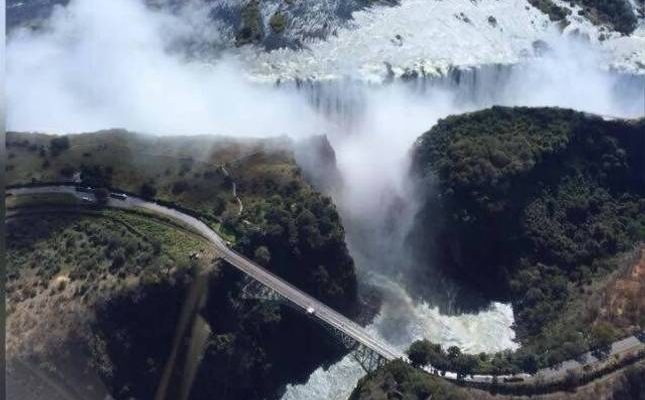
No description of a Livingstone itinerary can proceed without direct, honest engagement with Victoria Falls — the reason the town exists, the reason visitors make the journey, and one of the most overwhelming natural spectacles accessible to the human being anywhere on earth. The falls are 1,708 metres wide and drop between 90 and 107 metres into the Batoka Gorge below — the widest curtain of falling water on earth, generating a spray plume visible from 50 kilometres away and an associated roar audible from 40 kilometres. The local Lozi name — Mosi-oa-Tunya, the Smoke That Thunders — is more accurate and more evocative than Livingstone’s European renaming, capturing both the visual and the acoustic reality of an experience that consistently defeats the human instinct to find adequate words. The falls change character dramatically with the Zambezi’s seasonal water levels — at peak flood in April and May the spray is so dense that the falls themselves are largely invisible, the experience one of sound and mist and raw physical force rather than visual spectacle. At low water in October and November the full width of the rock face is exposed and the curtain of falling water, though reduced, can be walked behind along the Knife Edge and Main Falls viewpoints in complete visibility. Every water level offers a different and equally valid experience of one of earth’s great wonders, and the four days of this itinerary allow multiple visits at different times of day as the light and the spray interact in constantly changing ways.
Day 1 — Arrival & Victoria Falls First Encounter
Morning — Transfer & Livingstone Orientation Arriving at Harry Mwanga Nkumbula International Airport — Livingstone’s compact and efficient gateway — the transfer to the lodge passes through the town centre where the guide provides a brief orientation to the street grid, the market, the museum, and the practical geography of a town small enough to be navigated on foot but substantial enough to reward genuine exploration. The lodges serving this itinerary range across a spectrum of quality and character that Livingstone manages with impressive consistency — the Royal Livingstone Hotel sitting directly on the Zambezi bank with zebras grazing its lawns, Tongabezi Lodge upstream on the river in extraordinary private luxury, the Avani Victoria Falls Resort combining convenience with comfort, and several excellent mid-range options that deliver genuine quality at accessible price points. All share the defining characteristic of proximity to the falls and the river — within the sound of the falls on the quietest nights, within sight of the spray column from elevated positions, within the ecological community that the Zambezi’s permanent water creates along its banks.
Afternoon — Victoria Falls — First Visit The first visit to Victoria Falls — crossing the Mosi-oa-Tunya Road into the national park on the Zambian side, the entrance fee paid, the path into the forest beginning in the tree canopy above the gorge — is always, regardless of how much has been seen and read beforehand, a genuine surprise. The sound arrives first — a deep, continuous, physical roar that is felt as much as heard, building as the path descends toward the falls’ edge. Then the spray — a fine, permanent mist that begins at the forest boundary and increases in density as the viewing points are approached, soaking everything within minutes of sustained exposure. Then the falls themselves — first glimpsed through gaps in the spray-drenched vegetation, then seen in their full width from the Main Falls viewpoint where the entire eastern cataract is visible across the gorge — a wall of white water dropping into the abyss with a force and a volume that the mind cannot initially process as a single coherent sight. The Zambian side of the falls is less visited than the Zimbabwean and offers the most intimate and physically dramatic viewing — the Knife Edge Bridge at the gorge’s eastern end provides a perspective directly across from the falls with nothing between the viewer and the full force of the spray, the experience at peak water levels requiring full waterproof clothing and delivering a soaking of such completeness that it becomes itself a kind of baptism into the falls’ overwhelming reality. The afternoon visit is deliberately unhurried — the guide encouraging extended time at each viewpoint, different perspectives approached at different paces, the falls experienced as a sustained encounter rather than a rapid succession of photo opportunities.
Sunset — Zambezi Sunset Cruise The Zambezi at sunset is one of southern Africa’s great evening experiences — the river wide and slow above the falls, the papyrus islands catching the horizontal light, the hippos surfacing in the midstream channels, the African fish eagles calling from the riparian trees as the sun drops toward the Zimbabwean bank. The sunset cruise — conducted on a comfortable double-deck vessel with cold drinks and canapés, the guide identifying the wildlife visible from the water — provides a complete change of perspective and pace after the intensity of the falls visit. Elephants come to drink on both banks. Buffalo move in the open floodplain grassland above the river. Nile crocodiles bask on sandbanks until the last light fails. And the sky — the Zambian Zambezi sunset sky, unobstructed by urban light pollution, extending from horizon to horizon above the wide river — performs the colour display that has been the climax of so many southern African evenings and is never, in this setting, diminished by repetition.
Evening — Livingstone Town & Local Dinner The town of Livingstone in the evening has the relaxed, warm energy of a Zambian provincial town that has made a comfortable peace with its role as a visitor destination without allowing that role to overwhelm its fundamental character as a place where Zambians live and work. The cluster of restaurants, bars, and open-air dining venues near the town centre — Cafe Zambezi, The Old Drift Lodge’s restaurant, several well-regarded local establishments — offer food of genuine quality featuring fresh Zambezi fish, local vegetables, Zambian game meat, and the warm, generous hospitality that is the country’s most consistent and most appreciated characteristic.
Day 2 — Mosi-oa-Tunya National Park & Adventure Activities
Morning — Mosi-oa-Tunya National Park Game Drive Mosi-oa-Tunya National Park — named for the falls it protects and encompassing the riverine ecosystem on the Zambian bank upstream from Victoria Falls — is a small but rewarding wildlife destination whose proximity to the falls and whose population of white rhino make it a genuinely significant wildlife experience alongside the more famous natural wonder it adjoins. The park covers only 66 square kilometres but manages to support an impressive concentration of large mammals — elephant, buffalo, zebra, giraffe, various antelope species, and the protected white rhino population that is one of Zambia’s most carefully managed conservation assets — in the riverine woodland and open grassland along the Zambezi’s northern bank. The morning game drive enters the park at dawn, when the light is at its most beautiful and the wildlife most active — elephants moving between the river and the woodland interior, buffalo grazing the open areas above the bank, giraffe browsing the taller acacia in their unhurried, gravity-defying way. The white rhino — reintroduced and carefully protected within the park, each individual monitored by dedicated rangers — are typically encountered in the open grassland areas with the predictability that well-managed, small-area populations allow. A white rhino sighting in Mosi-oa-Tunya carries a conservation significance beyond its considerable visual impact — these animals represent a population deliberately rebuilt within a protected landscape, their presence a direct result of sustained conservation investment and community commitment.
Mid-Morning — Devil’s Pool Devil’s Pool is one of the world’s most extraordinary natural swimming experiences — a natural rock pool at the very lip of the Victoria Falls on Livingstone Island, accessible only during the low water season from approximately August through January when the water level drops sufficiently to create a calm pool directly above the main falls. Swimming to the edge of the pool and looking over the lip into the 100-metre drop of the falls below — with a natural rock barrier preventing the current from carrying swimmers over the edge — is an experience of controlled extremity that consistently produces expressions of disbelief in those who have just done it and expressions of longing in those who have not yet had the opportunity. The guide from Livingstone Island Activities manages the swim with practiced safety, the experience combining the genuinely vertiginous thrill of proximity to the falls’ drop with the perfectly rational reassurance of the rock lip’s protection. Breakfast on Livingstone Island itself — the island from which Livingstone made his first observation of the falls in 1855, a small forested island directly above the main curtain of water — combines the historical significance of the location with excellent food and the extraordinary sensory experience of eating breakfast with the falls audible below and the spray column rising above the island’s tree canopy.
Afternoon — White Water Rafting The Zambezi below Victoria Falls is one of the world’s premier white water rafting destinations — the gorge carved by the river below the falls providing a sequence of rapids of exceptional power and technical challenge over a 24-kilometre stretch that includes some of the most demanding commercially run white water on earth. The put-in point at the base of the gorge — reached by a steep descent of the gorge wall that is itself a physical commitment — places the rafting group on a river hemmed in by sheer basalt walls rising 120 metres above the water, the roar of the falls audible upstream, the first rapids visible ahead. Grade 5 rapids — the maximum category for commercially run white water — include legendary stretches with names like The Boiling Pot, The Terminator, and Ghostrider, their power and unpredictability managed by professional guides with years of Zambezi experience whose technical expertise and calm authority in the most extreme water conditions is both reassuring and quietly impressive. The full-day rafting covers roughly 24 kilometres of river, the gorge walls gradually lowering as the river descends, the rapids alternating with calmer stretches where the guides allow the rafts to drift and the group to swim in the warm Zambezi water and recover for the next set of rapids. The take-out point at the bottom of the gorge requires another steep climb — tired legs negotiating a staircase cut into the basalt — before the bus back to Livingstone completes a full day of the most complete physical engagement with the Zambezi that the river offers.
Evening — Recovery & Riverside Dinner The evening after a full-day Zambezi rafting experience has a specific and highly satisfying quality — the body pleasantly exhausted, the mind replaying specific moments of the day’s water encounters, the appetite considerable. The Royal Livingstone Hotel’s riverside terrace — where the sun sets directly above the falls’ spray column visible upstream, the hippos surfacing in the river below the hotel’s private beach, the impala grazing the lawns as the kitchen prepares dinner — is the most atmospheric dining location in Livingstone and the most appropriate reward for the physical intensity of the day.
Day 3 — Livingstone Island, Cultural Heritage & Upper Zambezi
Morning — Livingstone Museum & Historical Depth The Livingstone Museum — housed in a substantial colonial-era building in the town centre, its collections covering the full sweep of central African archaeology, ethnography, and natural history alongside the most comprehensive Livingstone archive in the world — is one of those genuinely excellent regional museums that rewards proper time and proper attention. The Livingstone collection — personal effects, journals, maps, the famous letters to his family, and the extraordinary artefacts of a Victorian explorer’s life in the African interior — is presented with historical honesty about both the explorer’s remarkable personal qualities and the colonial project his explorations were part of and served. The ethnographic collections from the Lozi, Tonga, and Ndebele communities of Zambia’s Southern Province are among the finest assemblages of central African material culture in any museum on the continent — beadwork, basketry, musical instruments, ceremonial objects, and the material evidence of agricultural and pastoral life across the Zambezi Valley providing context for the communities whose descendants still live in the landscapes the itinerary has been traversing. Two hours in the museum — properly engaged, with the guide available to answer questions and provide context — adds intellectual depth to the experiential richness of the surrounding days in a way that pays dividends across the remainder of the itinerary.
Midday — Mukuni Village Cultural Visit Mukuni Village — a large, living Leya community three kilometres from Victoria Falls whose Chief Mukuni holds traditional authority over the land on which the falls sit, including the Zambian national park — offers the most authentic and most carefully managed cultural tourism experience in the Livingstone area. Chief Mukuni’s community has maintained its traditional governance structures, its ceremonial practices, and its oral historical traditions across the colonial and post-colonial periods with a consistency that reflects both the community’s cultural resilience and the particular legitimacy that the Leya’s ancestral relationship with the falls provides. The village visit — guided by community members whose knowledge of their own culture is direct and personal rather than curated for external consumption — covers the traditional Leya homestead architecture, the agricultural practices of a community that has farmed the Zambezi Valley for centuries, the role of the chief’s court in community governance and dispute resolution, the material culture of baskets and pottery and iron-working that community artisans continue to practice with genuine skill, and the oral traditions about the falls that predate Livingstone’s arrival by many generations and that provide a completely different — and in many ways more intimate — relationship with the natural wonder than the European explorer’s famous description. The community market at the village entrance offers craft purchases that provide direct income to the artisans who made them, and the guide’s knowledge of which stalls represent genuine craft production rather than imported mass-produced goods makes the shopping experience both ethical and rewarding.
Afternoon — Upper Zambezi Canoe Safari The upper Zambezi above the falls — above the point where the river begins its final acceleration toward the Victoria Falls lip — is a completely different river from the churning white water of the gorge below. Wide, slow, island-studded, edged with papyrus and riverine forest, the upper Zambezi above Livingstone is one of southern Africa’s finest canoe safari environments — a river where the pace of travel perfectly matches the pace of the wildlife and the birding it supports. The afternoon canoe safari — conducted in stable Canadian-style canoes with an experienced guide managing each boat — drifts downstream through a landscape of extraordinary tranquility and wildlife richness. Hippos surface in the midstream channels, the guides managing safe passage with the practiced knowledge of river workers who have spent years reading hippo behaviour from a canoe at water level. Elephants come to drink on the islands and the Zambian bank, their grey shapes massive and calm at the water’s edge. African skimmer — that extraordinary bird with the elongated lower mandible designed for cutting the water surface to catch fish — works the calm river in the late afternoon light with a flight action of hypnotic elegance. Pied kingfisher and giant kingfisher work the papyrus margins. African fish eagle calls from every prominent dead tree. And the sounds of the falls — audible as a distant roar from the river above — provide a constant reminder of what the river is building toward downstream, the contrast between the upper river’s calm and the falls’ fury perfectly expressed in the afternoon’s gentle paddling progress through one of the Zambezi’s most beautiful stretches.
Sunset — Livingstone Island Sunset Visit A return visit to Livingstone Island in the late afternoon — timed for the specific quality of late light on the falls that the morning visit does not provide — offers the opportunity to see the spray column at its most dramatically illuminated, the western sun catching the rising water vapour in shafts of golden light that photographers describe as among the most technically demanding and most visually rewarding subjects they have encountered anywhere in southern Africa. The falls in the late afternoon light change colour every few minutes as the sun drops — the spray column moving from gold to copper to deep orange before the sun drops below the gorge rim and the falls return to their neutral white in the dusk. A sundowner on the island — the falls audible below, the spray creating a permanent cool microclimate above the rock lip, the Zambezi sliding past on its approach to the drop — closes the third day with a sensory experience of rare completeness.
Day 4 — Helicopter Flight, Bungee Jumping & Departure
Dawn — Helicopter Flight Over the Falls The helicopter flight over Victoria Falls is the single most comprehensive perspective available on a natural wonder that defeats ground-level comprehension by its very scale. Rising from the helipad in Livingstone and climbing above the gorge, the falls reveal themselves from the air as they cannot from any ground position — the full 1,708-metre width of the curtain visible simultaneously, the five distinct cataracts separated by the rock islands that divide the river above the lip, the gorge system below carved by the river’s successive changes of course over geological time visible in its full spatial complexity, and the spray column rising hundreds of metres above the falls and drifting downwind in a permanent cloud that marks the falls’ location from every direction for tens of kilometres. The fifteen-minute flight — extended options are available for those who want more time in the air — provides the visual synthesis of everything the ground-level visits across the preceding days have experienced in fragments, the aerial perspective completing the picture that the spray, the sound, the Knife Edge Bridge, and the Livingstone Island lip views have been assembling. The guides on the helicopter flights know the falls from the air with the intimacy of people who have flown this route hundreds of times and who can identify and explain every visual element of the landscape below — the basalt geology of the gorge walls, the specific cataracts and their local names, the whirlpools and eddies of the Boiling Pot below the falls, the town of Livingstone visible upstream with the Zambezi bridge connecting Zambia and Zimbabwe.
Mid-Morning — Bungee Jumping & Bridge Activities The Victoria Falls Bridge — the historic steel arch bridge completed in 1905 that spans the second gorge of the Zambezi between Zambia and Zimbabwe — is home to one of the world’s most dramatically situated bungee jumps, a 111-metre free fall from the bridge’s midpoint into the gorge with the falls visible upstream and the white water of the Boiling Pot directly below. The bungee operation — run by African Extreme with a safety record of complete reliability across decades of operation — manages the jump with the practised efficiency of an operation that has processed thousands of jumpers at one of the world’s most iconic sites. The commitment required at the jump platform — standing on the edge of a 111-metre drop with the gorge walls falling away on both sides and the sound of the falls filling the air — is a very particular kind of decision that has nothing to do with physical strength and everything to do with the willingness to override the survival instinct for a single, irreversible moment. Those who make that commitment describe the fall — the gorge walls rushing upward, the river swinging toward them as the bungee cord reaches its extension and begins the rebound — as an experience of complete, overwhelming physical sensation that is over in seconds and remembered for decades. For those who prefer their adrenaline at slightly lower intensity, the bridge offers a bridge slide and bridge swing that deliver genuine excitement at lower altitude and with less complete commitment.
Afternoon — Zambezi Fish Eagle Interaction & Departure Preparation The final afternoon before departure belongs to the river one last time — a short boat trip upstream from the Livingstone waterfront to the section of the Zambezi where the African fish eagle interaction experience is offered by specialist operators. Working with trained birds whose handlers use traditional falconry techniques adapted for the riverine context, the experience allows direct interaction with one of Africa’s most iconic raptors — the fish eagle landing on a gauntleted arm, its weight and grip and the fierce yellow of its eye at close range creating an encounter of genuine intimacy with a bird whose call has been the constant soundtrack of the four days’ Zambezi experience. The fish eagle in the hand — its talons gripping through the thick leather gauntlet, its head turning with the quick, precise movements of a bird of prey evaluating its immediate environment — transforms a familiar and beloved sound and silhouette into a fully three-dimensional physical reality that the distance of a riverside tree or a midstream perch never quite achieves. The transfer to the airport for the return flight follows, the Zambezi visible one last time from the road as Livingstone recedes and the four days of water and wildlife and wonder settle into the permanent category of experiences that change, in small but definite ways, how the world looks afterward.
Practical Notes
Best Season for Livingstone divides by activity and priority. The high water season of March through June brings the falls to their most powerful — the spray column at full height, the roar at full volume, the experience of raw natural force at its most overwhelming. The low water season of August through January exposes the full rock face of the falls, allows access to Devil’s Pool on Livingstone Island, and makes the canoe safari on the upper Zambezi most productive as wildlife concentrates along the river in the dry conditions. The white water rafting is best from August through December when the lower water levels make the rapids most technically challenging. Birding is excellent year-round with the wet season months of November through March bringing the Palearctic migrants.
Activity Combinations across four days can be adjusted based on visitor interests and fitness levels — the rafting and bungee jumping are physically demanding and can be replaced with additional game drives in Mosi-oa-Tunya, additional falls visits at different water levels and light conditions, or extension activities including microlight flights over the falls, horse riding in the bush adjacent to the national park, or visits to the Chobe National Park across the border in Botswana as a day trip from Livingstone.
Crossing into Zimbabwe from Livingstone via the historic Victoria Falls Bridge — the border crossing managed through a KAZA UniVisa available to citizens of many countries that permits movement between Zambia and Zimbabwe without paying separate visa fees for each country — extends the falls experience to the Zimbabwean viewing points that provide the most comprehensive panorama of the full falls width, the perspective from the Zimbabwean Rain Forest complementing the Zambian views in ways that make the combined experience considerably more complete than either country’s viewpoints alone.
Combining with Botswana — the Chobe National Park and the Okavango Delta both accessible within a day’s travel from Livingstone — extends the four-day Livingstone Explorer into a broader southern African safari itinerary of extraordinary diversity, the river culture and adventure activities of Livingstone balanced against the wildlife concentrations of Chobe and the unique wilderness character of the Okavango in a combination that represents some of the finest safari travel available anywhere on the continent.


 Email us bookings@twijaafrica.com
 Call us +256 777 559835