18-Day Tanzania Safari + Zanzibar — Following the Great Wildebeest Migration
The ultimate East African journey, timed and routed to intercept one of nature’s most staggering spectacles, bookended by the spice-scented paradise of Zanzibar.
The Migration — Understanding the Calendar
Before the itinerary unfolds, understanding the migration is everything. Over 1.5 million wildebeest, 400,000 zebras, and 200,000 gazelles move in a continuous clockwise loop across the Serengeti-Mara ecosystem, driven entirely by rainfall and grass. There is no single crossing point, no guaranteed date — only probability, patience, and positioning. This 18-day itinerary is built with enough flexibility and enough nights in key zones to dramatically increase your chances of witnessing the crossings, the calving, or the great herds in motion across the open plains.
Arusha — Gateway & Orientation
Your journey opens in Arusha, Tanzania’s northern safari capital, sitting at 1,400 metres above sea level between Mount Meru and the distant silhouette of Kilimanjaro. More than just a transit point, Arusha deserves a day of genuine attention. The Clock Tower sits at the precise halfway point between Cairo and Cape Town — a small but quietly profound detail that captures the city’s place at the heart of the continent. The Arusha National Park nearby offers an optional morning game drive or guided walk to ease your body and senses into the African bush.
Tarangire National Park — Elephants & Baobabs
The safari opens in earnest in Tarangire, where the landscape looks like it was painted by someone who had only ever dreamed of Africa. Enormous baobabs — some over a thousand years old — rise from cracked earth like upturned roots. The Tarangire River threads through the park as the only year-round water source, drawing wildlife from across the region in what becomes a daily procession of extraordinary scale. Elephant herds of fifty, eighty, a hundred strong move through the golden light. Predators — lion, leopard, cheetah — follow close behind the prey. With multiple nights here, you move beyond the main circuits and into quieter zones where encounters feel genuinely unscripted.
Lake Manyara National Park — Rift Valley Drama
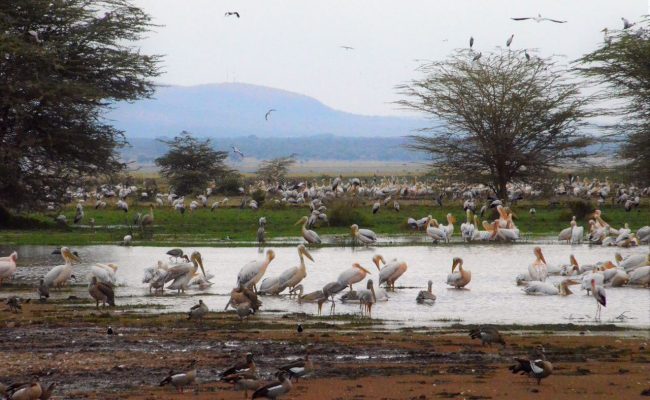
Framed by the towering escarpment of the Great Rift Valley on one side and the gleaming alkaline lake on the other, Lake Manyara is a park of theatrical contrasts. The groundwater forest at the entrance is dense and cool, alive with olive baboons, blue monkeys, and the rustle of things unseen. Then the forest gives way to open floodplains where thousands of flamingos paint the shallows pink. The tree-climbing lions of Manyara are the park’s most famous residents — individuals that have developed the habit of hauling themselves into the branches of fever acacia trees, looking down at the world with complete indifference. No one has fully explained why they do it. That mystery is part of the appeal.
Ngorongoro Crater — The Lost World
Descending into the Ngorongoro Crater for the first time is one of those experiences that rewires something in you permanently. The crater rim sits at 2,300 metres, often wreathed in mist and cloud forest. The descent into the caldera floor drops 600 metres into a self-contained world of 260 square kilometres, sheltering approximately 25,000 large mammals with no real ability to leave. Black rhino move cautiously across the crater floor — one of the last viable populations in East Africa. Lion prides here are genetically isolated, having bred within the crater for generations, giving them a slightly heavier build and darker manes. Hippos pack into the Fig Tree Pool. Thousands of wildebeest and zebra graze the open crater floor. And elephants — always the great tusked bulls — move slowly and deliberately through it all. A full day on the crater floor barely scratches the surface. Two days begins to feel like enough.
Olduvai Gorge — The Cradle of Humanity
Between Ngorongoro and the Serengeti, the road passes the edge of Olduvai Gorge — and stopping here is not optional on an 18-day itinerary of this depth. This unassuming ravine cutting through ancient volcanic sediment is where Mary Leakey discovered Australopithecus boisei in 1959, pushing back the known record of human ancestors by over a million years. The small museum is excellent. The gorge itself, walked with a knowledgeable guide, becomes genuinely moving — the realization that you are standing in the landscape where the human story effectively begins, looking out over the same plains your ancestors walked two million years ago.
Central Serengeti — Seronera Valley
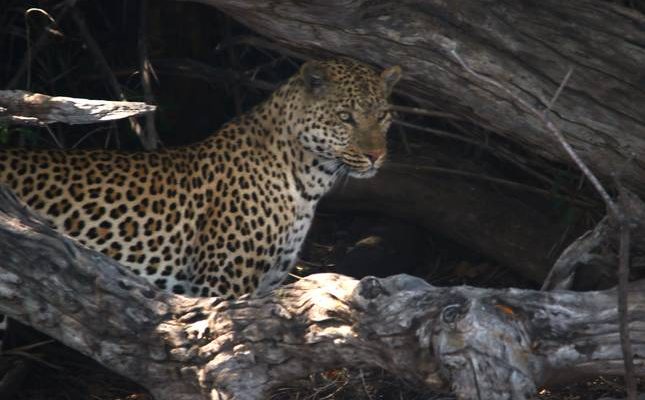
The Seronera Valley is the beating heart of the Serengeti, year-round and reliably spectacular. The Seronera River creates a ribbon of permanent water and vegetation through the central plains, making it the highest-density predator zone in the entire ecosystem. Lion prides here are large and well-studied — many individuals are known by name to researchers who have followed them for decades. Leopards favour the riverine fig trees along the banks, occasionally visible draped over branches with a kill wedged into the fork above them. Cheetah coalitions hunt openly on the short grass plains. And in migration season, the herds pour through in numbers that defy comprehension.
Western Corridor — Grumeti River Crossings
The western corridor of the Serengeti is where the migration makes its first dramatic river crossing. The Grumeti River is narrower and calmer than the Mara to the north, but what it lacks in visual drama it more than compensates for with the Nile crocodiles that wait in its shallows — enormous, ancient individuals that have learned to position themselves precisely where the wildebeest must cross. The crossings here are intense, chaotic, and often happen with little warning. Camps along the western corridor are fewer and more remote, giving the entire experience a rawness and exclusivity that the more visited central zones cannot quite match.
Northern Serengeti — Mara River Crossings
The northern Serengeti is the most dramatic act of the entire migration story, and the reason this itinerary extends to 18 days. The Mara River crossings — which occur roughly between July and October as the herds push north into the Masai Mara before returning south — are the iconic images that define the migration in the global imagination. Tens of thousands of wildebeest pile up on the southern bank, a churning, bellowing, terrified mass of animals, held back by nothing more than collective hesitation. Then something shifts — one animal commits — and the stampede begins. The crocodiles surge. The wildebeest pour into the water in their thousands. Some make it. Some do not. The river churns. And then it is over, as suddenly as it began, and the plains fall quiet again. With several nights in the north, you position yourself for multiple crossing opportunities, increasing your chances enormously compared to a single-night stay.
Ngorongoro Highlands — Empakaai & Maasai Culture
Returning through the highlands on the way back toward the coast, the itinerary weaves in time in the broader Ngorongoro Conservation Area — a landscape that is too often reduced to its famous crater alone. Empakaai Crater, reachable by a guided forest walk, holds a beautiful soda lake deep within its walls, surrounded by hagenia forest and alive with colobus monkeys. Ol Doinyo Lengai — the Mountain of God in Maasai — smokes quietly on the horizon. Time spent in a genuine Maasai boma, not a curated cultural performance but an actual community visit arranged through responsible operators, adds human depth to a journey that has so far been entirely focused on wildlife.
Zanzibar — The Spice Island Finale
After the intensity, the dust, the early mornings, and the sheer emotional weight of witnessing the Serengeti on this scale, Zanzibar is not merely a holiday add-on. It is a necessity. The flight from the mainland takes less than an hour and deposits you in a completely different world — Indian Ocean light, warm turquoise water, the scent of cloves and cardamom drifting through narrow stone alleyways. Stone Town, Zanzibar’s ancient capital, is a UNESCO World Heritage Site of extraordinary layered history — Arab sultanate architecture, Persian bathhouses, Indian merchant houses, and British colonial buildings all compressed into a warren of lanes barely wide enough for two people to pass. The slave trade history is confronted honestly in the Anglican Cathedral built on the site of the former slave market. The food scene — fresh seafood, Zanzibar pizza, spiced coffee — is genuinely world class for its genre. And then there are the beaches. The east coast particularly — Paje, Bwejuu, Jambiani — offers powdery white sand and reef-protected swimming in water so clear and warm it feels almost unreal after the red dust of the Serengeti. Snorkeling, diving, dolphin watching, spice farm tours, sunset dhow cruises — the final days unspool at whatever pace you choose.
Why 18 Days Changes Everything
Shorter safaris show you Tanzania. Eighteen days lets you feel it. The difference is not merely quantitative — more parks, more game drives — but qualitative. Rhythms establish themselves. You stop counting species and start noticing behaviours. The guides become genuine companions rather than service providers. You sit longer at sightings, wait out the midday heat properly, drive slowly enough to notice the small things — a dung beetle navigating a dirt road, a jackal pup learning to play, the way the Serengeti light turns everything gold for exactly twenty minutes before the sun drops. And at the end of it all, Zanzibar’s ocean erases the dust and resets everything, leaving you with the particular quiet of someone who has seen something they will spend the rest of their life trying to describe.
2 Days Akagera National Park Safari
3 Days Sossusvlei Amazing Red Dunes | Private Guided Lodge
Wild West Zambia – 15 Days / 14 Nights
5-Day Classic Premium Safari (Mid-Luxury)
Sossusvlei, Swakopmund and Etosha National Park 7 Days / 6 Nights
7 Days Safari Tanzania
18 Days Tanzania Safari + Zanzibar (Wildebeest Migration)
12 Days Luxury South Luangwa, Lower Zambezi & Victoria Falls
9 Days Rwanda Gorilla Experience & Safari
10 Day Ultimate Uganda Safari
11 Days Rwanda Wildlife Luxury Safari
Victoria Falls Luxury Stay (5 Days Base)
5-Day Luxury Safari
Namibia Signature Journey – Dunes, Wildlife & Wonder (11 Days)
Highlights of Zambia – 11 Days / 10 Nights


 Email us bookings@twijaafrica.com
 Call us +256 777 559835