2-Day Jinja Adventure Tour
The adrenaline capital of East Africa, sitting at one of the most mythologized geographical points on the continent — the source of the River Nile.
Jinja — Where the Nile Begins
Before the adventure starts, the place itself demands a moment of recognition. Jinja sits on the northern shore of Lake Victoria at the precise point where Africa’s greatest river begins its 6,650-kilometre journey north through Uganda, Sudan, and Egypt before emptying into the Mediterranean Sea. The explorer John Hanning Speke stood here in 1862 and declared it the source of the Nile — a discovery that had obsessed European geographers for centuries. That geographical significance saturates everything about Jinja, giving even the most adrenaline-charged activities an underlying sense of place and history that most adventure destinations simply cannot match. The town itself has undergone a quiet renaissance over the past decade — old colonial-era buildings repurposed into craft coffee shops, boutique guesthouses, and open-air restaurants lining the Nile’s banks, creating a laid-back riverside culture that perfectly balances the intensity of the activities on offer.
Day 1 — White Water & River Intensity
Morning — White Water Rafting the Nile There is no gentler introduction to Jinja than throwing yourself into Grade 5 rapids on the world’s longest river, and that is precisely how day one begins. The Nile below the source churns through a series of rapids that have made Jinja’s rafting reputation genuinely global — operators here run some of the most technically challenging commercially available white water rafting on earth. Grade 5 rapids like Itanda Falls — locally nicknamed “The Bad Place” with obvious affection — are among the most powerful stretches of commercially rafted white water anywhere. The full-day rafting experience covers roughly 27 kilometres of river, passing through a sequence of rapids interspersed with calmer stretches where you float on your back in the warm equatorial water staring up at African sky, trying to process what just happened. Professional guides with years of Nile experience manage every rapid with a combination of technical precision and theatrical enthusiasm. Safety kayakers shadow every raft. The experience is simultaneously terrifying and completely safe, which is exactly the right combination.
Midday — Riverside Lunch Between rapid sections, lunch is served on the riverbank — a spread of sandwiches, fruit, and cold drinks that tastes considerably better than anything has a right to taste when you are wet, slightly shaken, and grinning without entirely meaning to. The lunch stop often coincides with one of the calmer, more beautiful stretches of the river — wide and green, lined with fig trees and papyrus, with kingfishers and African fish eagles working the water around you.
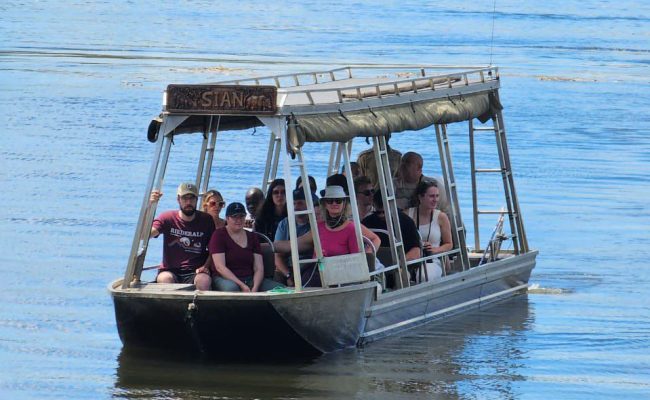
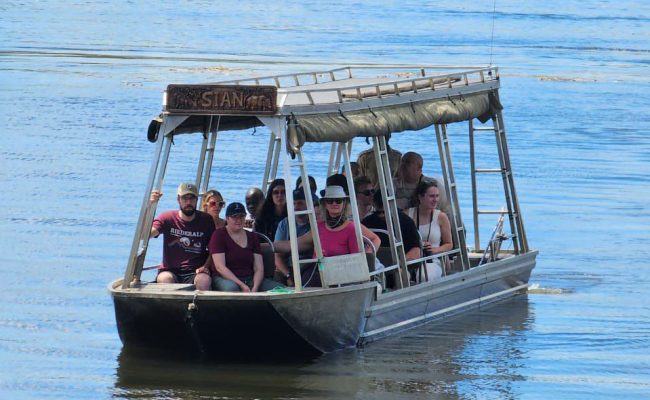
Afternoon — Bujagali Falls & Evening on the Nile The afternoon brings calmer water and a different kind of engagement with the river. Bujagali Falls — a series of powerful but navigable drops just below the main rafting sections — can be explored by kayak for those who want to extend the water time, or simply watched from the rocky banks where local fishermen work the edges with handlines. As the light softens into late afternoon gold, the river transforms. Boat rides up toward the source in the evening light are quietly spectacular — egrets and cormorants crowd the papyrus islands, hippos surface mid-river, and the vast mirror of Lake Victoria glimmers in the distance where the Nile begins.
Evening — Jinja Town & Nile-Side Dining Jinja’s small but genuinely charming town centre comes alive in the evening. The main street has a relaxed energy — craft stalls, local restaurants, and the particular warm sociability of a Ugandan town that has made peace with tourists without being consumed by them. Dinner on the Nile bank — fresh tilapia from the lake, roasted matoke, cold Nile Special beer — with the sound of the river below and the equatorial night sky above is a near-perfect end to a day of extraordinary physical experience.
Day 2 — Altitude, Speed & Source
Dawn — Quad Biking Through Village Trails Day two opens with a different kind of adrenaline — quad biking through the network of red dirt trails that wind through sugarcane plantations, banana groves, and fishing villages surrounding Jinja. The routes take you deep into the countryside that most visitors never see — past brick-making yards, through school compounds where children erupt in cheerful chaos at the noise of the engines, along ridgelines with sweeping views across the Nile valley and Lake Victoria. The landscape is intensely green, the tracks are properly challenging in places, and the contrast between the rawness of the terrain and the intimacy of the villages creates a texture of experience that purely river-based activities cannot provide. Local guides lead the way, narrating the landscape and making introductions where appropriate.
Mid-Morning — Horseback Riding Along the Nile For a complete change of pace and perspective, mid-morning brings horseback riding along the Nile’s banks — one of Jinja’s most underrated and quietly beautiful activities. The horses are well-handled and suited to riders of all experience levels, and the trails move through riparian forest, open meadows above the river, and red laterite paths that wind between small farms. From horseback the river reveals itself differently — wider, more patient, more ancient. The sound of the rapids carries from downstream while above you African fish eagles circle on thermals, their distinctive call echoing across the water. This is the Nile at its most contemplative, and the contrast with yesterday’s chaos makes it all the more affecting.
Late Morning — Kayaking & Stand-Up Paddleboarding Back on the water, the late morning offers the chance to engage with the Nile at your own pace. Flatwater kayaking on the calmer sections above the rapids is meditative and deeply pleasurable — paddling through papyrus channels, nosing into quiet backwaters, disturbing a monitor lizard sunning itself on a log. Stand-up paddleboarding on the same stretches requires more concentration but rewards with an extraordinary sensation of standing on the surface of the Nile, balancing above four thousand kilometres of river yet to flow. For the more adventurous, white water kayaking clinics with experienced instructors introduce the basics of reading rapids and managing a kayak in moving water.
Afternoon — The Source of the Nile No visit to Jinja is complete without a dedicated visit to the source itself — a boat ride out to the precise spot on Lake Victoria where the Nile begins its northward journey. The site is marked simply, almost modestly, given its significance — a small island and a cluster of papyrus reeds where the lake narrows into the river’s first defined channel. Floating above this point in a small boat, the scale of what begins here is almost impossible to hold in your mind. Every civilisation built along the Nile’s banks — ancient Egyptian, Nubian, Sudanese — was made possible by the rainfall that fell on these equatorial hills and flowed into this lake and began moving north from exactly this spot. The boat ride back toward town in the afternoon light, watching the Nile widen and gather momentum as it heads for the first rapids downstream, brings the two days into a kind of quiet completion.
Evening — Sunset Cruise & Farewell The final hours in Jinja belong entirely to the river. A sunset cruise upstream toward the source, timed to catch the equatorial sunset — which happens fast and dramatically close to the equator, the sun dropping in minutes rather than the long drawn-out affairs of higher latitudes — is the perfect closing ceremony. Cold drinks, warm light, hippos surfacing around the boat, the sound of the first rapids beginning downstream, and the knowledge that the water moving beneath you will not reach the Mediterranean for months, passing through nine more countries on the way. There is no better place on the continent to feel simultaneously small and completely alive.
Practical Notes
Jinja sits approximately 80 kilometres east of Kampala — a drive of roughly two hours depending on traffic, or a comfortable two-and-a-half-hour journey by road with a knowledgeable driver who can narrate the landscape on the way. Accommodation ranges from the excellent Wildwaters Lodge — situated on its own private island mid-river, accessible only by boat — to the more accessible Nile River Explorers Camp and a growing collection of boutique guesthouses in town. The best months to visit are the dry seasons — December to February and June to September — when water levels are optimal for rafting and the skies are clear. But Jinja works year-round, and even the rainy seasons bring their own drama to a river that is, at its core, all about the relationship between water and the land it moves through.
12 Days Honeymoon Tanzania + Zanzibar Clone
2 Days Akagera National Park Safari
3 Days Rwanda Gorilla Trekking Safari
4 Days Zambia-Livingstone Explorer


 Email us bookings@twijaafrica.com
 Call us +256 777 559835