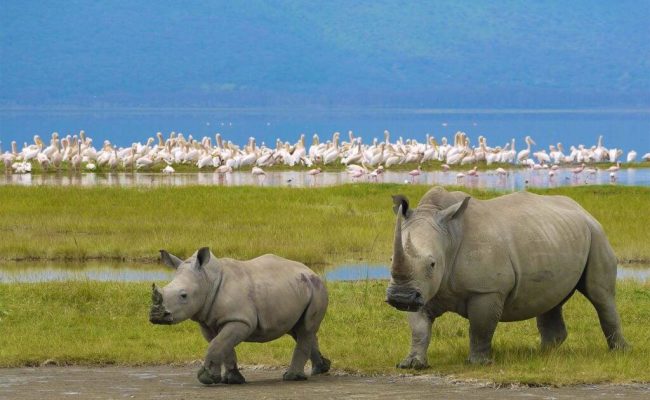
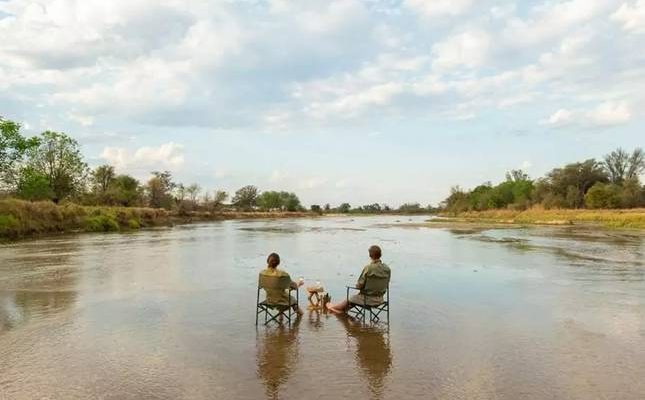
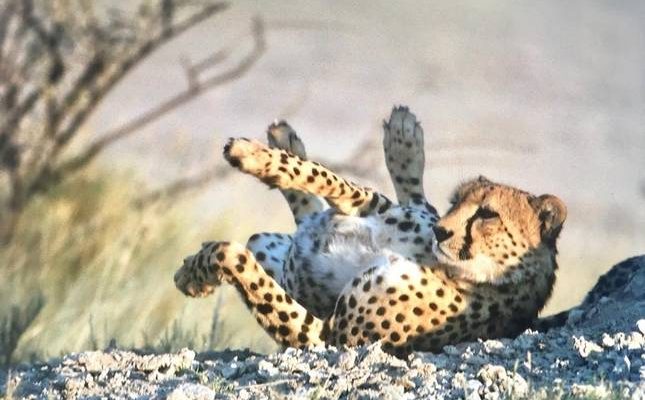
This 11-day, 10-night journey traverses Kafue National Park from south to north, offering an in-depth exploration of Zambia’s largest and most diverse national park — a vast wilderness roughly the size of Wales, yet still one of Africa’s best-kept safari secrets. Unlike shorter itineraries that sample a single area, this route allows travelers to experience the full range of Kafue’s varied ecosystems, from the miombo woodlands and dambos of the south to the floodplains and river systems of the north.

The journey typically begins in the southern reaches of the park around the Busanga-adjacent or Itezhi-Tezhi areas, known for open plains, wide skies, and strong predator sightings, before moving north through the park’s central woodlands and river valleys. The route culminates in the famed Busanga Plains, a seasonal wetland that transforms into one of Africa’s most spectacular wildlife theaters — vast herds of red lechwe, puku, and buffalo drawing in lion prides and cheetah across open, cinematic grassland.

Along the way, the varied terrain supports an exceptional range of activities — day and night game drives, boat safaris and fishing on the Kafue River, and walking safaris through areas rarely visited by other travelers. Kafue’s remoteness and low visitor numbers mean sightings feel earned and exclusive, a genuine wilderness experience far removed from the more crowded circuits elsewhere in Southern Africa.

With its combination of ecological diversity, low tourist density, and a slow, immersive south-to-north traverse, this itinerary is ideal for experienced safari travelers seeking depth and discovery over convenience — a true off-the-beaten-path Zambian adventure.

This 11-day, 10-night journey traverses Kafue National Park from south to north, offering an in-depth exploration of Zambia’s largest and most diverse national park — a vast wilderness roughly the size of Wales, yet still one of Africa’s best-kept safari secrets. Unlike shorter itineraries that sample a single area, this route allows travelers to experience the full range of Kafue’s varied ecosystems, from the miombo woodlands and dambos of the south to the floodplains and river systems of the north.

The journey typically begins in the southern reaches of the park around the Busanga-adjacent or Itezhi-Tezhi areas, known for open plains, wide skies, and strong predator sightings, before moving north through the park’s central woodlands and river valleys. The route culminates in the famed Busanga Plains, a seasonal wetland that transforms into one of Africa’s most spectacular wildlife theaters — vast herds of red lechwe, puku, and buffalo drawing in lion prides and cheetah across open, cinematic grassland.

Along the way, the varied terrain supports an exceptional range of activities — day and night game drives, boat safaris and fishing on the Kafue River, and walking safaris through areas rarely visited by other travelers. Kafue’s remoteness and low visitor numbers mean sightings feel earned and exclusive, a genuine wilderness experience far removed from the more crowded circuits elsewhere in Southern Africa.

With its combination of ecological diversity, low tourist density, and a slow, immersive south-to-north traverse, this itinerary is ideal for experienced safari travelers seeking depth and discovery over convenience — a true off-the-beaten-path Zambian adventure.

Accomodation

Provided

Meals

Full board

Transportation

Tour van

Group Size

1-20

Language

English

Pets

No pets

Age Range

12-70 (Year)

Season

All year

Category

Adventure

Tour Itinerary

Expand All +
  • icon
    Arrive Livingstone / Lusaka — Transfer to South Kafue
    Gateway transfer → Nanzhila / Dundumwezi Gate · 3–5 hrs by road or 1-hr charter
    Transfer daySouth Kafue lodgeArrival drive
    Two gateway options for south Kafue: Livingstone (Victoria Falls) is ~3.5 hrs by road to the Dundumwezi gate — the southern entry point. Alternatively, fly Lusaka → Lusaka (charter to Nanzhila airstrip, 1 hr) direct into the southern sector. Livingstone is the more scenic approach through the Batoka Gorge country. Lusaka is the more time-efficient. Either works — discuss with your operator based on your international connection.
    • Arrive Livingstone or Lusaka — meet your Kafue specialist operator at arrivals
    • Road transfer to south Kafue via Itezhi-Tezhi road or direct charter flight to Nanzhila airstrip
    • Enter the park through Dundumwezi or Nanzhila gate — the southern sector is immediately different from the rest of Kafue: open miombo woodland and Kalahari sandveld rather than riverine forest
    • En route game drive through the southern plains — the road from the gate to the camp passes through some of the best cheetah and wild dog habitat in Zambia
    • Arrive at south Kafue camp by late afternoon — welcome briefing, sundowner, and orientation to the sector
    South Kafue — the least-visited sector of Zambia's largest park. The Nanzhila Plains are flat, open, and extraordinarily remote — no mobile signal, no other vehicles, no tourist infrastructure beyond a handful of specialist camps. The silence here is absolute. This is wild Africa at its most elemental, and it is where the safari begins.
    Bush Camp · Premier
    Nanzhila Plains Safari Camp
    Remote tented camp on the Nanzhila Plains · 5 tents · En-suite · Full board · Private vehicle + guide ·
    · Specialist wild dog and cheetah camp · Outstanding guiding team
    ★★★★★
    Bush Camp · Alternative
    Mayukuyuku Bush Camp
    Central Kafue but accessible from south entry · Open-sided chalets · Kafue River frontage · Full board ·
    · More central location
    ★★★★
    In-transit mealSundowner (camp)Dinner (camp incl.)
    Kafue park fees: Zambia Wildlife Authority (ZAWA) park fees for Kafue are ~$25/person/day. These are typically included in your camp rate — confirm with your operator. If self-driving, pay at the gate in USD cash. Having the right fee in exact bills speeds up entry considerably.
    Nanzhila Plains — Cheetah, Wild Dog & Open Savannah
    Full day · Nanzhila Plains · South Kafue's most open terrain
    Wild dogCheetahRoan antelopeWalking safari
    The Nanzhila Plains — wide, flat, Kalahari sandveld grasslands that make south Kafue the best place in Zambia — and one of the best in Africa — to find cheetah and African wild dog. The open terrain means these fast-running predators have the space and prey (puku, oribi, reedbuck) they need in large numbers. Your guide will have tracked the current wild dog pack movements from the previous day's radio network.
    • Dawn game drive departing camp at 5:30am — the flat plains are best explored in the cool of the morning when cheetah are active
    • Wild dog tracking — the Nanzhila area has a well-established wild dog population; packs of 8–15 dogs are regularly tracked here; follow a pack on a morning hunt across the open grassland — one of Africa's most thrilling predator experiences
    • Cheetah on the open plain — south Kafue consistently produces some of Africa's best cheetah sightings; the flat terrain means you can watch the entire hunt unfold from start to finish without losing sight of the animal
    • Roan antelope — the south sector has exceptional roan viewing; these large, horse-like antelope with scimitar horns are rare across most of Africa but common here
    • Sable antelope — the dramatic black sable with curved horns is another south Kafue speciality; find them in small herds in the woodland margins
    • Oribi, reedbuck, Lichtenstein's hartebeest, and Kafue lechwe on the seasonal pans
    Walking safari on the Nanzhila Plains — walking in this open terrain gives a completely different perspective. The guide reads tracks in the sand — cheetah pugmarks from last night, wild dog trail across the grassland, lion drinking at a pan edge. No trees to hide behind; just you, the guide, and the vast flat savannah in every direction.
    • 2–3 hour guided walking safari led by your camp guide (armed scout escort) — explore the Nanzhila grassland on foot
    • Track the morning's hunting activity — wild dog and cheetah kills leave distinctive evidence in the sand and on the grass
    • Termite mound ecology — the enormous termite castles of the south sector are ecosystems in themselves; hornbills, mongoose, and warthog all use them
    • Return to camp for bush breakfast — a full breakfast spread set up in the field beside the vehicle
    • Afternoon drive exploring the southern pan system — seasonal waterholes that concentrate wildlife dramatically in the dry season (June–October)
    • Elephant herds at the pans — south Kafue has large, relaxed elephant populations; herds of 30–60 animals are common at the water sources
    • Lion prides — the Nanzhila lion population is strong; prides with cubs are regularly located near the larger pans
    • Sunset on the open plains — the vast flat horizon turns orange and purple; a gin and tonic poured by the guide on the open grassland with no other human presence visible in any direction
    Second night · Same camp
    Nanzhila Plains Safari Camp
    Two nights in the south allows a full walking + driving day · No repacking · Your guide knows the current wild dog pack territory from Day 1 and positions accordingly on Day 2
    Night game drive option
    Night drive in south Kafue
    South Kafue permits night drives from private camp concessions · Look for: leopard, serval, civets, porcupine, African wild cat, and aardvark · Spotlighting reveals a completely different predator world after dark
    Bush breakfast (field)Camp lunchCampfire dinner (incl.)
    Wild dog watching protocol: African wild dog hunts are fast and chaotic. When your guide says the pack is moving, hold on and drive quickly to stay ahead of the hunt direction. Keep noise minimal once stationary. The hunt typically lasts 3–15 minutes — have your camera ready before the guide stops the vehicle, not after.
    Nanzhila → Ngoma Sector — Elephant Country
    ~120km north through south Kafue · Ngoma sector · Kafue River first views
    ~120km transferElephant herdsLeopard woodlandNgoma camp
    • Final dawn game drive on the Nanzhila Plains (5:30am–9:00am) — last wild dog and cheetah opportunity before moving north
    • Pack camp after breakfast — the vehicle transfer north takes most of the morning
    The south-to-north drive — the road through south Kafue is itself an extended game drive. The terrain transitions from open Kalahari sandveld through mixed miombo woodland to the more riverine vegetation of the Ngoma sector. This transition zone is exceptional for elephant; herds of 50–100 animals move through the woodland seasonally, and the chance encounters on the road between camps are some of the best of the entire 11 days.
    • Depart Nanzhila after breakfast (~9:30am) — drive north on the network of bush tracks through southern Kafue
    • Stop at Shezongo Pan en route — a large seasonal waterhole that attracts elephant, buffalo, and lion; excellent midday photography as animals use the water during the heat
    • Picnic lunch in the field — guide selects a shade tree beside the road for a full packed lunch
    • Continue north into the Ngoma sector — the vegetation thickens and the first Kafue River tributaries appear crossing the road
    • Arrive Ngoma camp area by late afternoon — afternoon game drive from camp
    • Ngoma ("drum" in Tonga) is named for the sound of the Kafue River rapids nearby — the sector marks the transition from the open south to the riverine central zone
    • Large elephant herds in the Ngoma sector — the Kafue River attracts enormous concentrations of elephant in the dry season; herds of 100+ animals are possible
    • Leopard in the riparian woodland — the dense fig and sausage trees along the Kafue River tributaries are prime leopard territory; your guide scans every suitable horizontal branch
    • Puku antelope — the Kafue puku (a subspecies unique to Kafue) replaces the Nanzhila's oribi and reedbuck here; golden, short-horned, and occurring in large herds along the riverbanks
    Bush Camp · Ngoma
    Ngoma Safari Lodge
    On the Kafue River · First river views of the trip · En-suite chalets · Full board ·
    · Excellent elephant and leopard guiding from this base
    ★★★★
    Alternative
    Hippo Bay Camp
    Kafue River bank · Tented camp · Hippos audible from camp · River activities available · Full board ·
    ★★★★
    Bush breakfast (Nanzhila)Picnic lunch (field)Dinner (Ngoma camp)
    Ngoma — Kafue River Morning & Deep Woodland Drives
    Full day in Ngoma sector · River boat activity + woodland game drives
    Kafue River boatElephant + LionBirdingNight drive
    First morning on the Kafue River — a motorboat glides out into the river at dawn, the water completely still, mist rising from the surface. Hippos yawn from their pools. Fish eagles call from the dead trees that line the bank. Puku herds drink at the water's edge. The Kafue River is the spine of this park — spending time on it reveals an entirely different dimension of the ecosystem from the land-based drives of the south.
    • Dawn motorboat cruise on the Kafue River (1.5–2 hrs) — hippos in territorial pods, Nile crocodiles basking on sand spits, elephant families crossing the river at known fords
    • African skimmer on the river surface — the distinctive low-flying fishing technique is best observed at dawn from the water
    • African fish eagle calling from every tall tree along the bank — the most iconic sound of Zambia's waterways
    • Pel's fishing owl territory — your guide knows which dead trees along this stretch are used by Kafue's resident Pel's fishing owls; spotting one roosting in the fig trees is a major birding highlight
    • Extended walking safari through the Ngoma miombo woodland (2–3 hrs after mid-morning rest)
    • Broad-leaved miombo woodland — the dominant vegetation of south and central Kafue; learn to identify the brachystegia trees that define this ecosystem and the specialist birds (racket-tailed roller, Böhm's flycatcher) that live only in miombo
    • Buffalo herd encounter on foot — approaching buffalo on foot with an experienced guide is one of Zambia's most adrenaline-producing walking safari experiences; the guide reads the herd's body language constantly
    • Afternoon game drive through Ngoma's river network — follow the seasonal tributaries for leopard, lion, and the large elephant concentration
    • Lion pride tracking — the Ngoma lion population is strong; prides use the riverine woodland for shade during the heat and the open grassy margins for hunting at dusk
    • Night drive from camp (if concession permits) — aardvark, serval, African wild cat, and leopard on nocturnal patrol along the riverbank
    Second night · Ngoma
    Same Ngoma camp (Day 3)
    Two Ngoma nights provides a full activity day on the river and in the woodland without moving camp · Request the riverside chalet for hippo viewing from the tent deck at night
    Upgrade option
    Mukambi Safari Lodge
    Kafue River · Island lodge · Excellent boat and canoe activities · Full board ·
    · Strong reputation for river guiding
    ★★★★★
    Dawn boat + bush breakfastCamp lunchSundowner + camp dinner
    Kafue puku subspecies: The puku antelope at Kafue are a distinct subspecies (Kobus vardonii) from those found elsewhere in Zambia and Zimbabwe. They are golden-coloured, shorter-horned, and occur in herds of 20–40 animals along the Kafue River banks — far more gregarious than the usually solitary individuals seen elsewhere. Their alarm call (a sharp whistle) is often the first indicator of a predator nearby.
    Central Kafue — Canoe Safari & Sitatunga in the Papyrus
    Kafue River central corridor · Canoe days · Sitatunga · Hippo channels
    2-day canoeSitatungaHippo channelsTiger fishingPapyrus birding
    Central Kafue — the Kafue River broadens in the central sector, its banks lined with dense papyrus beds that shelter one of Africa's most secretive antelopes: the sitatunga. A fully aquatic antelope, the sitatunga has splayed hooves and a greasy, waterproof coat — it lives almost entirely within the papyrus and swims freely between beds. Finding one on foot at the papyrus edge, or by canoe from the water, is central Kafue's signature wildlife moment.
    • Depart Ngoma camp after breakfast — drive north along the Kafue River to the canoe launch point in the central sector
    • Launch onto the Kafue River in Canadian canoes — guide assigns paddling positions and explains the hippo navigation protocol
    • First hours on the central Kafue: the river is wider and slower here than the south; the papyrus beds on both banks reach 4–5 metres high, creating a cathedral-like corridor of green
    • Sitatunga search — approach the papyrus edge quietly; sitatunga come to the water's edge at dawn and dusk to drink and feed; the guide paddles silently and signals when a shape is visible in the reeds
    • Hippo pods in the river channels — navigate around pods using the guide's signals; hippos in central Kafue are habituated to canoe traffic and generally more relaxed than lower-river populations
    • Elephant at the river crossing — herds swimming the Kafue in the dry season are common; watch from the canoe as they submerge and surface mid-river
    • Camp on a sandbank or at a riverside bush camp overnight
    • Dawn on the river — the best birding time; paddle silently along the papyrus edge as the birds awaken
    • Papyrus specialist birds: papyrus yellow warbler, white-backed night heron, lesser jacana, African pygmy goose, African skimmer, lesser moorhen
    • White-crowned lapwing — territorial and noisy, nesting directly on sandbanks exposed by the dry season river level
    • Wattled crane — Kafue's waterways support Zambia's largest wattled crane population; the enormous grey and white birds stalk the shallows at the river's edge
    • Tiger fishing from the canoe — the central Kafue's faster water below the papyrus sections is excellent tiger fish habitat; guide rigs light spinning tackle from the canoe; explosive strikes are common in the current below midstream rocks
    • Return to land camp or continue by vehicle to the central Kafue camp for nights 5–6
    River Camp · Central Kafue
    Kafue River Camp or Mukambi Plains
    Central Kafue River bank · En-suite tented chalets · Boat and canoe access · Full board ·
    · Canoe activities booked through camp
    ★★★★
    Sandbank fly camp option
    Kafue River Sandbank Camp
    Sleep on the river sandbank in a fly-camp tent · Most immersive canoe experience · Cook-over-fire meals · No facilities · Total wilderness ·
    · Pre-arrange with your operator
    Camp breakfastsRiver picnic lunchesCamp dinners (incl.)
    Sitatunga sighting tips: The sitatunga is most active at dawn and dusk. Approach the papyrus edge from the water (canoe) rather than land — footsteps on the bank flush them immediately. Look for the distinctive rusty-brown coat and the hunched back profile at the papyrus margin. The male has spiral horns. Your guide will hear the alarm splashing before you see the animal — watch where they focus.
    Lunga-Luswishi Confluence — Buffalo Country
    Northern central sector · Lunga River confluence · Huge buffalo herds · Transition to north
    Buffalo herdsLion pridesLunga RiverBegin north push
    Lunga-Luswishi — where the Lunga River meets the Kafue in the northern-central sector is one of the most productive wildlife areas in Kafue NP. The confluence creates an extensive wetland complex that attracts massive buffalo herds (some exceeding 1,000 animals in the dry season), multiple lion prides that follow them, and large elephant concentrations. It is also the gateway area for the push north toward Busanga.
    • Drive north from central Kafue camp — the road transitions from riverine woodland to increasingly open floodplain margins
    • First massive buffalo herds — the north-central sector buffalo herds are extraordinary; finding a herd of 500–1,000 animals moving across the plain with lion following on the flanks is one of Kafue's most dramatic wildlife sightings
    • Lion prides following the buffalo — the Lunga lions are large, robust, and well-fed from the year-round buffalo abundance; prides of 12–16 animals are not unusual
    • Boat activity on the Lunga River confluence — the papyrus and waterways around the confluence support lechwe, sitatunga, and remarkable waterbirds including the African open-bill stork and yellow-billed stork
    • Waterbuck in large herds at the water margins — the Kafue's defassa waterbuck have a distinctive wet-circle pattern on their rump; herds of 30–50 use the confluence banks
    • Late afternoon: arrive at the northern transition camp — final night before the Busanga charter tomorrow
    Camp · Lunga area
    Lunga River Lodge
    On the Lunga River · Remote tented camp · Full board ·
    · Excellent buffalo and lion guiding · Boat activities on the Lunga
    ★★★★
    Alternative
    Lufupa River Camp
    Lufupa River near northern sector boundary · Tented camp · Full board ·
    · Good staging point before Busanga charter
    ★★★★
    Bush breakfastField picnic lunchCamp dinner (incl.)
    Buffalo herd photography: When approaching large buffalo herds by vehicle, switch off the engine and allow the vehicle to coast to a stop in the herd's wake. Buffalo are easily spooked by engine noise but almost completely ignore a stationary silent vehicle. Your best images come from being inside the herd, not approaching it from the front.
    Busanga Plains — The Crown Jewel of Kafue
    Charter flight into Busanga · 3 full days · Lechwe floodplain · Lion · Wild dog · Roan
    Charter into BusangaKafue lechweWild dogLion pridesRoan · Sable
    The Busanga Plains — a vast seasonal floodplain in the far northwest of Kafue, one of the most extraordinary ecosystems in Africa. When the Busanga swamp recedes in the dry season (July–October), it reveals a flat, open grassland of extraordinary extent — carpeted with Kafue lechwe (a floodplain antelope found almost exclusively in Zambia), patrolled by lion prides adapted specifically to the open plain hunting style, and hosting some of Zambia's largest wild dog pack territories. Access is by charter flight only — there is no practical road option.
    • Morning charter flight from Lufupa or Lunga airstrip to Busanga airstrip (~30 min) — the aerial view of the plains from above is itself extraordinary; thousands of lechwe visible from the air as the plane banks over the floodplain
    • Land on the grass strip and transfer directly to camp (10–15 min drive) — no other camps, no other vehicles, no noise except the wind and the birds
    • Camp orientation and afternoon game drive — the scale of Busanga is immediately apparent: the horizon is flat in every direction, broken only by the occasional palm island
    Kafue lechwe on the Busanga Plains — the Kafue lechwe (Kobus leche kafuensis) is a Zambia endemic floodplain antelope occurring only in the Kafue ecosystem. In the dry season, herds of thousands concentrate on the Busanga as the floodplain dries — making this the most important lechwe population in the world. Watching 3,000 lechwe stampeding across the plains as a lion pride gives chase is one of Africa's great wildlife spectacles.
    • Kafue lechwe herds — thousands of animals on the open plain; the males' lyrate horns and the herd's splashing gallop through shallow water are iconic Busanga images
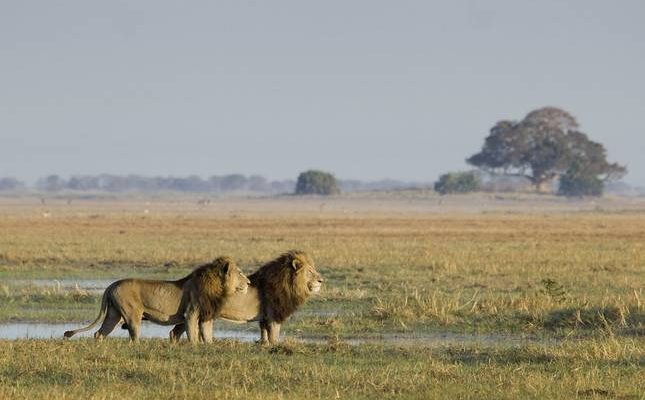
    • Lion prides on the open plain — Busanga's lions are adapted to open-country hunting in a way rarely seen elsewhere; pride sizes of 15–25 animals have been recorded; the open terrain means you watch entire hunts from start to finish
    • Wild dog packs — Busanga hosts some of Kafue's largest wild dog packs (up to 25+ animals); the open floodplain is perfect wild dog terrain; hunting the lechwe herds produces extraordinary encounters
    • Roan antelope — the Busanga has Zambia's highest roan density; large herds of 20–30 animals are typical; this large, horse-like antelope with ringed face markings and scimitar horns is rare across most of Africa
    • Sable antelope — the spectacular black sable occurs in herds on the woodland margins of the plain; old bulls are jet-black with sweeping curved horns
    • Tsessebe — one of Africa's fastest antelopes and one of Africa's rarest; Busanga is one of the best places in Zambia to find them
    • Oribi — small, delicate gazelle-like antelope common on the short-grass areas between the lechwe herds
    • Dawn drives (5:30am) across the open plain — the flat light at first light makes for extraordinary photography; lion prides returning from overnight hunts, lechwe silhouetted against the sunrise
    • Mid-morning: follow wild dog pack activity — the Busanga packs often hunt in the early morning while it is still cool, then rest in the afternoon
    • Afternoon drives position for lion hunting at dusk — the late afternoon when the heat breaks is when Busanga's lion prides begin to move and the lechwe herds become nervous
    • Night drives from camp (concession area) — serval cats are regularly found on the plain edge at night; spotted hyena follow the lion kills; aardvark digging on the termite mounds
    Hot air balloon over Busanga Plains
    The Busanga Balloon Safaris (operated seasonally July–October) offers dawn balloon flights over the plains — floating above lechwe herds at sunrise, watching lion move below you on the open floodplain, with the Busanga's vast horizon in every direction. One of the most extraordinary balloon experiences in Africa — a step above even the Serengeti given the complete absence of other vehicles or tourists.
    . Book in advance through your operator.
    Bush Camp · Busanga · Premier
    Busanga Bush Camp
    Remote tented camp directly on the plain · 4 tents only · En-suite · Full board · Private game drives ·
    · Open July–October only · The most intimate Busanga experience
    ★★★★★
    Bush Camp · Alternative
    Shumba Camp (Wilderness Safaris)
    Wilderness Safaris' Busanga camp · Larger · More facilities · Raised platforms overlooking the plain · Full board ·
    · Higher spec, larger group capacity
    ★★★★★
    All bush breakfasts (field)Camp lunchesCamp dinners (all incl.)
    Busanga season: The Busanga Plains are only accessible July–October (dry season). Before July the floodplain is still inundated and the camps are closed. October is the best month — peak game concentrations as the dry season climax draws all wildlife to the last water sources — but also the hottest (35°C+). August and September are ideal: game is concentrated, temperatures are manageable (28–32°C), and the wild dog packs are most active.
    Final Busanga Dawn → Charter to Lusaka — Departure
    Last dawn on the plains · Charter flight Busanga → Lusaka · Onward connection
    Final dawn driveCharter to LusakaOnward connection
    Last dawn on the Busanga — the final morning always carries extra weight. The lechwe herds move in the golden light. A lion pride, full from last night's kill, rests on the plain 50 metres from the vehicle. A wild dog pack trots purposefully across the horizon. You have been here three days and the scale of this place has only grown — it is one of those landscapes that expands the longer you spend in it.
    • Final dawn game drive departing 5:30am — last tracking of the wild dog pack, last lion and lechwe photography in the golden hour
    • Return to camp by 9:00am — breakfast, pack bags, farewell with the Busanga team
    • Charter flight: Busanga airstrip → Lusaka (approx. 1.5–2 hrs with possible Lufupa refuelling stop)
    • Arrive Lusaka by midday — transfer to Kenneth Kaunda International Airport for onward flights
    • Direct connections from Lusaka (KK International): Nairobi, Johannesburg, Addis Ababa, Dubai, London (via JHB)
    • Add-on option: Lusaka overnight before continuing to Lower Zambezi NP (2 hrs drive) or South Luangwa NP (charter flight 45 min) for a longer Zambia circuit
    • Victoria Falls extension: charter or road from Livingstone (3 hrs from Lusaka by road, or 45 min by charter to Harry Mwanga Nkumbula Airport)
    Hotel · Lusaka
    Southern Sun Ridgeway
    Lusaka city centre · Pool · Restaurant · Good standard ·
    · Reliable and comfortable transit option
    ★★★★
    Hotel · Airport area
    Radisson Blu Lusaka
    Close to KK International Airport · Good restaurants · Pool ·
    · Best for early morning international departures
    ★★★★★
    Bush breakfast (Busanga)In-flight snackLusaka lunch / airport
    Charter flight logistics: All charter flights within Kafue are operated by small aircraft (Cessna Caravan 208 or similar, 5–9 seats). Baggage limit is strictly 15kg in a soft-sided bag per person — hard suitcases cannot be loaded and excess bags stay in Lusaka. Confirm your charter schedule 48 hours before with your operator as weather and other bookings occasionally cause changes.

Include Features

Exclude Features

  • 11 days of adventure
  • Memorable sights and experiences